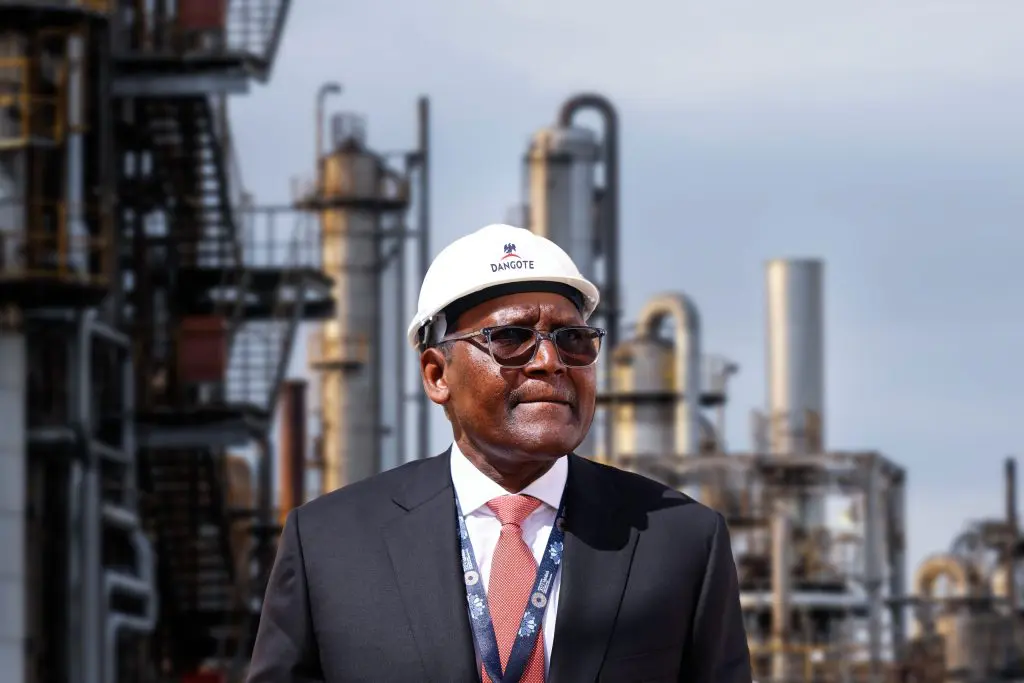
The Dangote Refinery in Ibeju-Lekki, Lagos, has put Nigeria on the global maritime map, turning the country into a major hub for crude oil and refined petroleum shipments.
The 650,000-barrel-per-day refinery has transformed Nigeria’s shipping landscape, increasing vessel traffic and trade volumes while generating significant revenue for the government.
Since its commissioning in May 2023 and full operations in January 2024, the refinery has shifted Nigeria from a heavy fuel importer to a net exporter of refined petroleum products, a milestone state-owned refineries could not achieve in decades.
The refinery has also strengthened domestic fuel supply, bringing down diesel prices and improving energy availability across the country. Its impact extends beyond the oil sector, with maritime logistics and port activity benefiting from the increased volume of imports and exports.
According to the International Maritime Organization, Nigeria is now the fastest-growing maritime hub in the world. Ports across the country are handling more vessels and larger volumes of crude and refined products than ever before.
The refinery imports crude oil from countries like Brazil, Angola, Equatorial Guinea, and the United States, while exporting refined products to Africa, Asia, Europe, and North America, including the United States, Spain, Saudi Arabia, and South Africa.
The Nigerian Ports Authority reports that crude oil imports for the refinery reached 5.67 million metric tonnes in the first half of 2025, up 26.5 per cent from the same period in 2024. Refined product exports totalled nearly one million metric tonnes in the same period, highlighting the growing role of Nigeria’s ports in regional and global trade.
With its expanding production, the refinery is reshaping regional energy trade. Lagos is emerging as a preferred hub for petroleum products, challenging traditional centres like the Lomé floating oil market in Togo. Analysts note that Dangote’s exports of diesel and jet fuel are now meeting much of West and Central Africa’s demand, reinforcing Nigeria’s position as a key player in maritime trade.
source: hallmarknews.com

 African Maritime Council