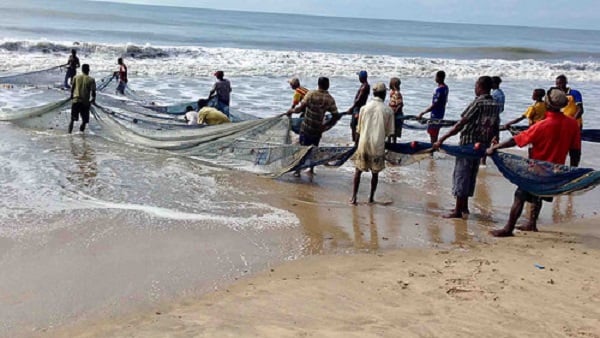
Over the past decade, IUU (illegal, unregulated, and unreported) fishing has expanded into a lucrative trade across West Africa, putting local livelihoods at risk. Weak fisheries governance has allowed industrial trawlers to enter zones reserved for artisanal fishers, threatening small pelagic stocks. The European Union warned Ghana that it could lose access to European seafood markets unless it addressed IUU fishing.
In response, Ghana adopted a new fisheries and aquaculture law. Parliament passed the bill in July, and President John Dramani Mahama signed it into law in August.
Ghana’s Ministry of Fisheries and Aquaculture explained that the law strengthens government efforts to maintain access to global seafood markets. The ministry emphasised that seafood has become one of the country’s fastest-growing non-traditional exports.
The Environmental Justice Foundation (EJF), a campaign group monitoring IUU fishing in Ghana, praised the law as a bold step in regional leadership. The Act protects the livelihoods of small-scale fishers and millions of Ghanaians who rely on artisanal fisheries.
A key reform under the new law expands the inshore exclusion zone, giving local fishermen more space to fish without competition from industrial trawlers. Traditional fishers have faced intense competition from Chinese-backed trawlers, particularly through the “saiko trade”, which transformed from a barter system for bycatch into industrial trawlers supplying frozen stocks to small canoe operators for resale.
This practice has depleted small pelagic fish, which artisanal fishermen traditionally catch for local consumption. Over the years, average income for artisanal canoes has dropped, and most small-scale fishers report declining catches.
Earlier this year, Ghana moved to control industrial trawlers by suspending the fishing licences of several Chinese vessels. The vessels faced accusations of unauthorised transshipment at sea and other violations. The government imposed a one-year fishing ban on these vessels to protect local fisheries.
source: maritime-executive.com

 African Maritime Council