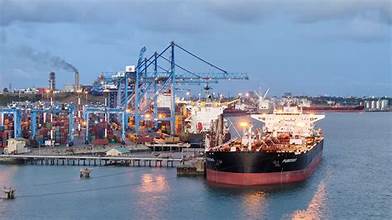
Kenya’s Port of Mombasa has recorded a first for East Africa with the arrival of the Norwegian-flagged LNG-powered vehicle carrier Höegh Australis. The vessel berthed at quay one on 26 December after an 11-day voyage from Singapore, offloading 824 vehicles and related cargo destined for Kenya and inland regional markets.
Höegh Australis is a roll-on/roll-off vessel measuring 200 metres in length and 38 metres in width, with capacity for more than 9,300 vehicles across 16 decks. Its design and scale reflect the newer generation of car carriers now entering global service.
The ship operates primarily on liquefied natural gas, using conventional fuel only during start-up and limited manoeuvring. Its successful call demonstrates Mombasa’s readiness to receive LNG-powered vessels, placing the port among a growing number in Africa adapting to lower-emission shipping.
LNG use significantly reduces ship emissions. It almost completely eliminates sulphur oxides and particulate matter, lowers nitrogen oxide emissions by up to 85 per cent, and reduces carbon dioxide output by around 20 per cent compared to heavy fuel oil. For port cities such as Mombasa, Durban, Port Elizabeth and Lagos, these reductions contribute directly to improved urban air quality.
The vessel has also been built to accommodate future fuel transitions. It is ammonia-ready and designed to shift to zero-carbon fuels as infrastructure and supply chains develop.
Mombasa handles more than 30 million tonnes of cargo each year and serves as a key gateway for East and Central Africa. LNG-powered vessels are generally newer, larger and more fuel-efficient, supporting lower transport costs and more reliable shipping services. This strengthens the port’s role as a regional hub and supports trade flows to cities including Kampala and Kigali.
Kenya Ports Authority has linked the vessel’s arrival to its Green Port Policy, which aligns with national clean energy objectives. Investments in electric cargo handling equipment, energy-efficient lighting and digital traffic management systems have already reduced vessel waiting times by around 30 per cent over the past decade.
Across the continent, port and logistics demand continues to grow. The African Development Bank estimates that Africa will require around 100 billion dollars in port and logistics investment over the next ten years to keep pace with trade and population growth.
Source: africaports.co.za

 African Maritime Council