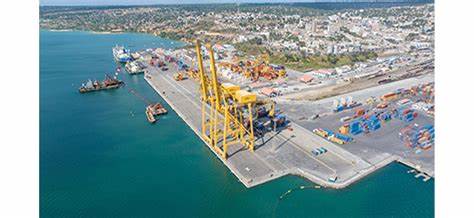
Mozambique has launched an international tender to concession the Integrated Expansion and Development Project at the Port of Nacala, a step that will change how one of the country’s key trade gateways operates.
This week, the Council of Ministers authorised the Ministry of Transport and Logistics to look for private partners to modernise and run the port under a concession agreement.
Under the plan, the state will keep ownership of the infrastructure, while the selected company or consortium will take on investment and operational responsibilities.
The Port of Nacala, located in Nampula province, is Mozambique’s largest natural deep-water port. It plays an important role in the Nacala Corridor, which connects Mozambique to Malawi, Zambia, and other inland parts of Southern Africa.
The port can handle up to 10 million tonnes per year, but it processed only 3.5 million tonnes in 2024, meaning it operated at 35 per cent of its capacity.
Government spokesperson Inocêncio Impissa pointed to the port’s three main terminals: a container terminal, a general cargo terminal, and a liquid bulk terminal.
Even with these facilities in place, authorities say the port still requires further upgrades to reach its full capacity.
The integrated project includes improving the existing terminals, developing a special economic zone and dry ports, and building a floating dry dock along with support infrastructure.
Officials expect these improvements to increase efficiency, lower transport costs, and attract more foreign investment.
President Daniel Chapo has also highlighted the importance of the Nacala Corridor for regional trade and has encouraged international investors, including those from Japan, to support its development.
In addition to the container and general cargo operations, the nearby coal terminal at Nacala-a-Velha remains a key part of the corridor’s logistics system.
Vale originally developed the coal terminal and the 912-kilometre railway linking the Moatize coal basin to the port. Vale, Mitsui, and Mozambique Railways invested $4.5 billion in the project before inaugurating it in 2016. In 2022, they transferred the assets to Vulcan Resources, part of India’s Jindal Group.
Vulcan now runs the coal terminal and railway through the CLN consortium alongside Mozambique’s CFM, maintaining large-scale coal exports and supporting the corridor’s role in regional mineral exports.
The Nacala Corridor continues to serve as a major export route for coal and an essential trade link for landlocked Malawi and Zambia. In 2023, Mozambique signed agreements with both countries to strengthen cooperation and increase use of the corridor.
source: africaports.co.za

 African Maritime Council