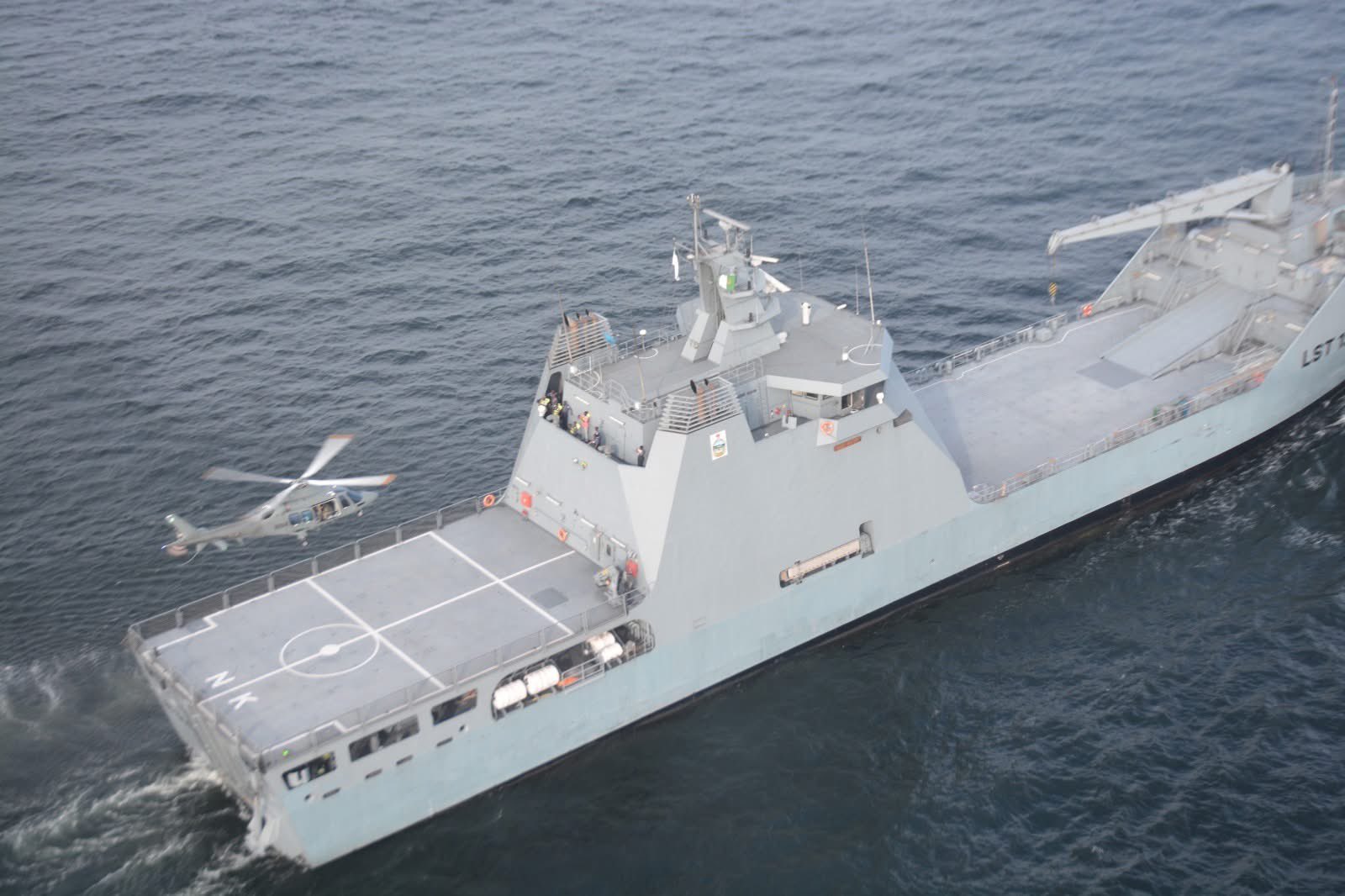
The Grand African NEMO 2025 exercise, the biggest yearly maritime security activity in West and Central Africa, wrapped up across the Gulf of Guinea after bringing together 19 African coastal navies and seven international partners. For one week, they carried out coordinated drills focused on regional security, maritime governance, and cooperation between different agencies.
Held from 10 to 17 November, the exercise formed a central part of the Yaoundé Architecture for Maritime Security, the system created by ECOWAS, ECCAS and the Gulf of Guinea Commission to address illegal activities at sea.
This year’s edition involved participation from across the entire Gulf of Guinea, from Senegal to Angola. The African coastal states that took part included Senegal, Gambia, Guinea-Bissau, Guinea, Sierra Leone, Liberia, Côte d’Ivoire, Ghana, Togo, Benin, Nigeria, Cameroon, Equatorial Guinea, São Tomé and Príncipe, Gabon, the Republic of Congo, the Democratic Republic of Congo and Angola.
Seven partner countries contributed ships, aircraft or specialist teams. These partners were France, Italy, Spain, Portugal, Denmark, Mauritania and Morocco.
A number of international maritime organisations also provided support, including the UN Office on Drugs and Crime, INTERPOL, the European Union through its EnMar and SEACOP programmes, the European Fisheries Control Agency, regional fisheries bodies such as FCWC and COREP, and the French pollution-response agency Cedre.
GANO 2025 focused on strengthening the region’s ability to run coordinated State-Action-at-Sea missions. The training covered many of the Gulf of Guinea’s key security concerns, such as countering piracy and armed robbery, stopping drug trafficking and smuggling, addressing illegal fishing, improving pollution response, enhancing search-and-rescue efforts, refining boarding and inspection procedures, and improving information sharing through the Yaoundé coordination centres.
More than 55 naval and coastguard vessels and 11 aircraft took part, carrying out drills across several maritime zones. These operations were supported by land-based command posts and Maritime Operation Centres connected through the Yaoundé network.
source:africaports.co.za

 African Maritime Council