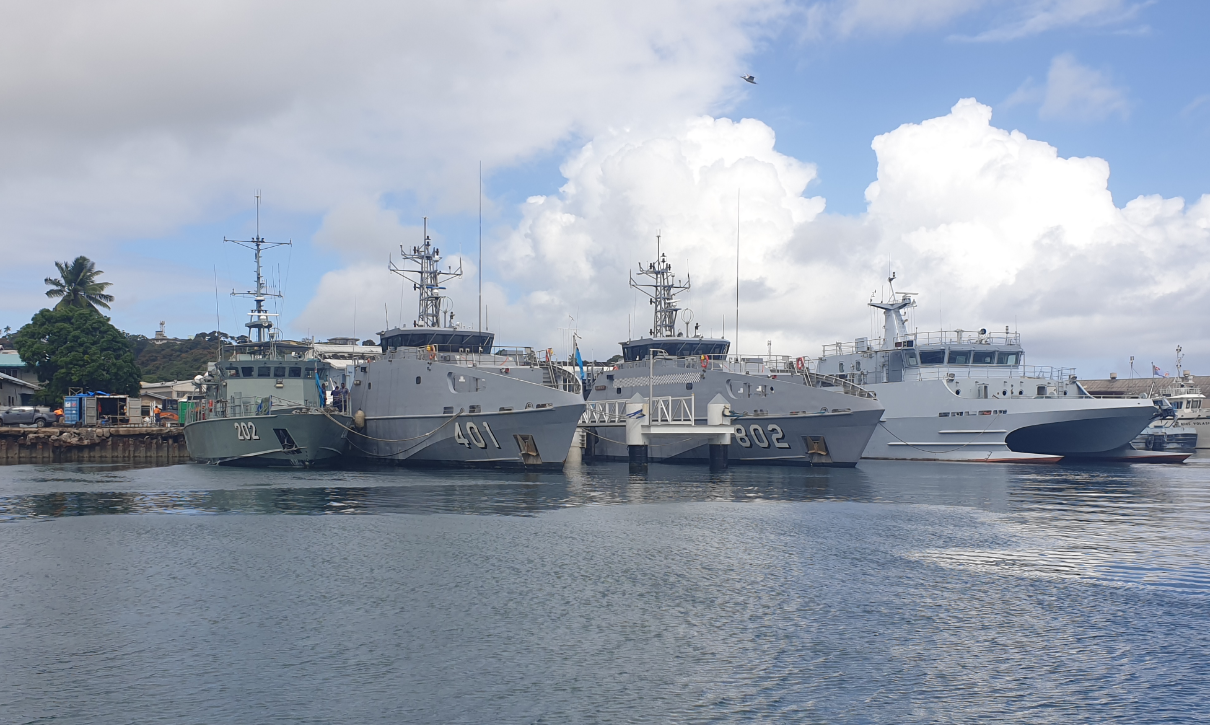
Liberia has strengthened its maritime security capabilities after receiving two high-speed Rigid Hull Inflatable Boats (RHIBs) and advanced forensic equipment from the European Union. The handover marks an important investment in the country’s ability to monitor and protect its maritime domain.
Built by Narwhal Boats SL, the 9-metre RHIBs can reach speeds of up to 54 knots and operate over a range of 200 nautical miles. Equipped with modern navigation, communication and surveillance technology, the vessels will support search and rescue operations, fisheries enforcement, counter-narcotics efforts and other maritime security tasks. The forensic equipment will help authorities collect and preserve evidence linked to maritime crimes.
The donation forms part of the EU’s SWAIMS programme, which supports cooperation between Liberia and the European Union in addressing illegal activities across the Gulf of Guinea. The new assets will also strengthen coordination with agencies working to combat piracy, illegal fishing and maritime trafficking.
Later this year, the Liberia Coast Guard will participate in a regional maritime exercise led by the Portuguese Navy alongside neighbouring countries, including Sierra Leone and Côte d’Ivoire. Both countries have also received similar support aimed at improving regional maritime security cooperation.
Strong maritime security helps protect fisheries, coastal communities and natural resources while supporting the rule of law and sustainable development in Liberia. The EU also acknowledged the contributions of Instituto Camões and the Portuguese Navy, which have helped train Liberian Coast Guard personnel and support the delivery of the initiative. Since 2022, 32 officers have completed specialised training in boarding operations, pollution response and fisheries inspections, helping ensure the effective use of these new capabilities.
source: European Union in Liberia
