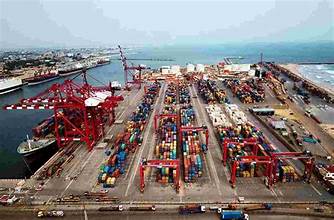
Nigeria’s Federal Government has approved the comprehensive modernisation and upgrade of four major ports outside Lagos as it seeks to reduce the country’s reliance on the Lagos port complex and develop a more balanced network of maritime gateways.
The latest approval covers Onne and Rivers ports in Rivers State, Delta Port in Delta State and Calabar Port in Cross River State.
The approval follows the earlier decision to modernise and upgrade Apapa and Tin Can Island ports in Lagos. This brings six major existing ports into the government’s current port renewal programme.
Minister of Marine and Blue Economy Adegboyega Oyetola said the government wants the expansion of the modernisation programme beyond Lagos to create more gateways for international trade and reduce the concentration of cargo around Lagos.
The government expects the upgrades to improve cargo handling, reduce vessel turnaround times and improve connections between the ports and their surrounding markets. It also expects the changes to make cargo movement more predictable and reduce logistics costs.
Oyetola said Onne, Rivers, Delta and Calabar ports each have important roles in Nigeria’s trade and industrial activity. He said the government wants to equip them to handle growing demand.
The decision matters because Lagos currently handles a large share of Nigeria’s international container traffic. Developing other ports could give importers and exporters more options and reduce the pressure on the Lagos corridor.
Cargo destined for the eastern, south-eastern and south-southern parts of Nigeria could also move through ports closer to their final markets. This could reduce the need to move some goods from Lagos over long road distances.
The four ports serve different parts of Nigeria’s coastal economy.
Onne and Rivers ports serve the Port Harcourt and Niger Delta region, which has strong industrial and energy activity. Onne also plays a major role in offshore oil and gas logistics.
Delta Port serves the Warri area and supports the industrial and energy activities around the region.
Calabar Port provides a maritime gateway for Cross River and the wider south-east. Its location also gives it potential relevance for trade with neighbouring Cameroon.
The government therefore wants to develop more than additional cargo capacity. Its plan also aims to give businesses the option of using ports closer to where goods originate or where they are ultimately needed.
Oyetola said the port programme forms part of a wider plan to connect maritime gateways with roads, railways, inland waterways and other transport infrastructure.
The government has not publicly provided the full capital cost, financing structure, detailed scope of works or implementation schedule for the newly approved modernisation programme. The September approval therefore gives the programme government backing, but it does not by itself mean that all construction work has started or that every part of the investment has been financed.
There is, however, some activity that predates the latest approval. In April 2026, the government said procurement processes were underway for the modernisation of Warri, Port Harcourt, Onne and Calabar ports.
Recent industry reporting has also pointed to specific work at some facilities. Reports indicate that Rivers Port Terminal 1 has been undergoing berth upgrades, while Calabar Port is expected to receive further maintenance dredging. Reports also say the Federal Executive Council approved a channel management consortium for maintaining and deepening channels serving Delta ports.
The Federal Government has also linked the port programme to plans for new deep-sea ports. These include Ibom, Bakassi, Agge, Gateway, Ondo and Bonny, covering several coastal states outside Lagos.
Taken together, the existing port upgrades and proposed new deep-sea ports point to a broader attempt to distribute maritime activity across different parts of Nigeria rather than relying heavily on Lagos alone.
source: https://africaports.co.za/
