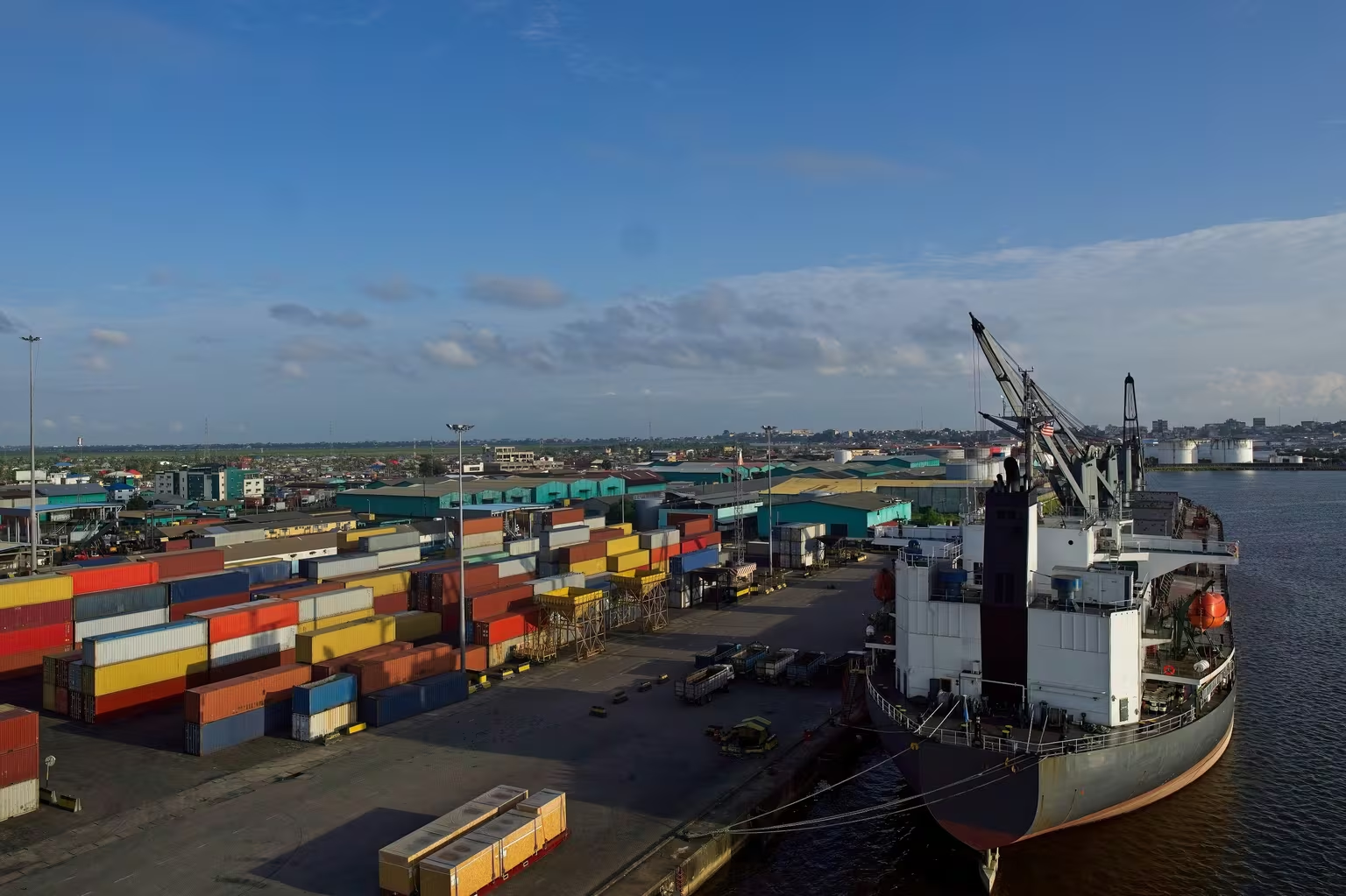
The Federal Government has restated its commitment to reviving Nigeria’s Eastern ports to ease pressure on Lagos and create a more balanced port system across the country.
Minister of Marine and Blue Economy, Dr Adegboyega Oyetola, CON, made this known in his keynote address at the League of Maritime Editors’ Annual General Meeting and Conference in Lagos. The conference focused on the theme “Lagos/Eastern Ports: How to Reverse Existing Imbalance in Disproportionate Cargo Vessel Calls”.
Represented by the Ministry’s Director of Information and Public Relations, Mrs Anastasia Ogbonna, the minister said the low use of Onne, Calabar and Port Harcourt ports was driving up logistics costs and affecting supply chain efficiency. He said the government would continue to invest in port modernisation, navigation, security, digitalisation and connectivity. He added that Lagos and the Eastern ports should work alongside each other to support trade and strengthen Nigeria’s maritime sector.
The Director-General and Chief Executive Officer of the Nigerian Ports Economic Regulatory Agency (NPERA), Dr Pius Akutah, MON, represented by the Deputy Director of the Standard Services Division, Ms Adaora Nwonu, said competition and commercial factors should determine where cargo moves, rather than administrative decisions.
Akutah said cargo owners and shipping lines should be free to choose ports based on cost, efficiency, connectivity, reliability, security and quality of service.
He said the heavy concentration of cargo in Lagos had increased congestion, raised logistics costs and put more pressure on road infrastructure. He added that this situation was also limiting the economic benefits that other regions could gain from maritime trade.
To address the imbalance, he called for more investment in roads, rail, inland waterways and inland dry ports to create efficient cargo routes between seaports and destinations across the country.
Akutah also highlighted the need for greater digitalisation and transparent port performance data. This should include vessel waiting time, cargo dwell time, terminal turnaround time, port charges and logistics costs.
He said reliable performance data would help cargo owners and other port users compare their options, make informed decisions and encourage competition among Nigerian ports.
Akutah proposed a National Port Competitiveness Index and a National Cargo Distribution Strategy to identify and build on the strengths of individual ports.
He called on key stakeholders, including the Nigerian Ports Authority, Nigeria Customs Service, shipping lines, terminal operators, state governments and private investors, to work together to address the infrastructure, operational and regulatory challenges affecting the effective use of Nigeria’s ports.
Earlier, the President of the League of Maritime Editors, Remi Itie, called for greater attention to issues affecting the development and long-term sustainability of Nigeria’s maritime sector.
source:maritimafrica.com
