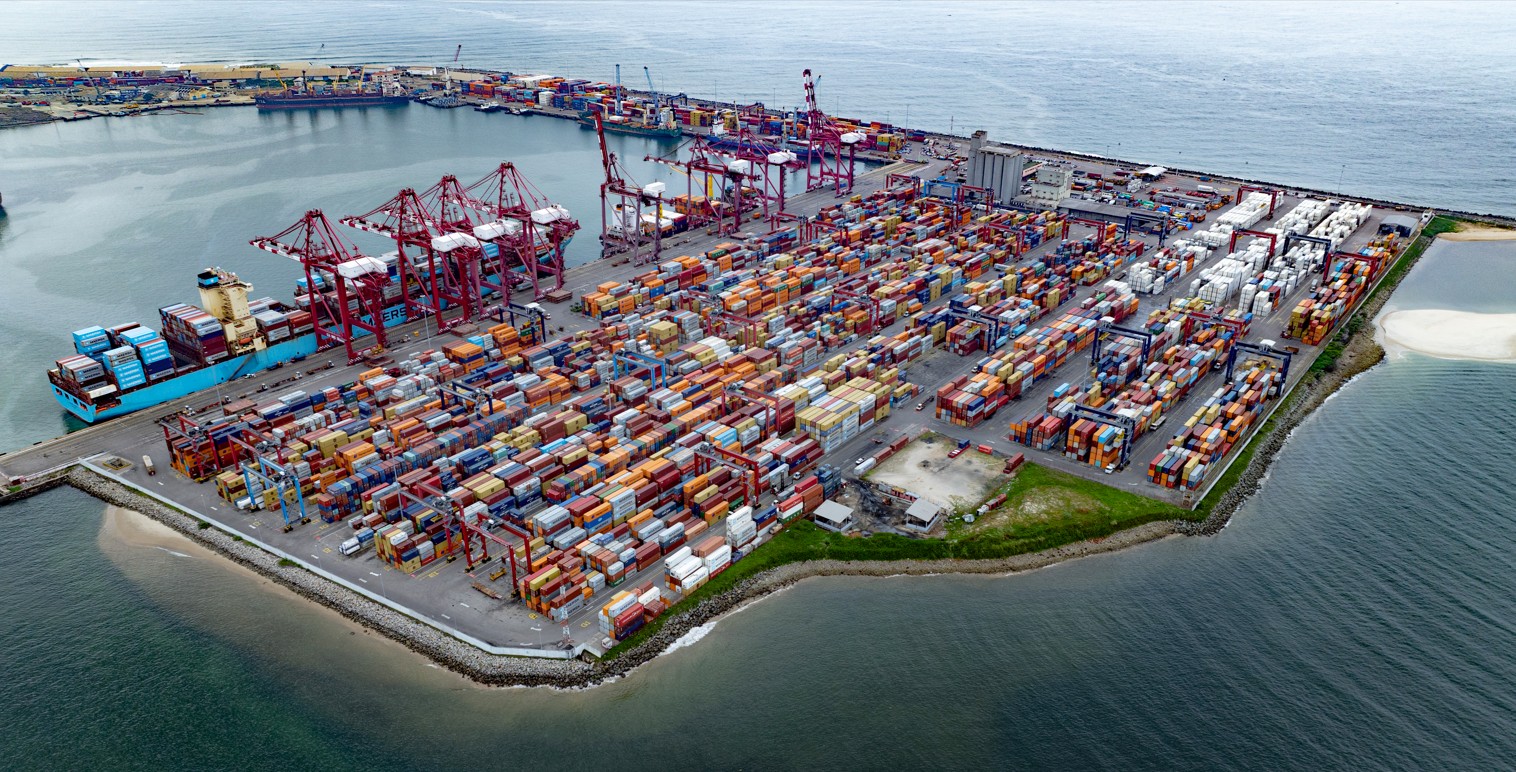
As part of its port expansion project, Congo Terminal has launched dredging operations that require a specialized approach because of the presence of oil sands.
Before starting the work, Congo Terminal carried out detailed topographical, bathymetric, magnetometry, geotechnical and geophysical studies, including drilling more than 200 boreholes. Using the findings, the company developed a 3D model of the bituminous sand layers, allowing it to adapt its dredging methods and equipment while reducing potential environmental impacts.
Since the project began, Congo Terminal has deployed three different types of dredgers. To protect the marine environment, the company has put in place a pollution prevention system that includes 5.5 kilometres of floating booms, 4 kilometres of containment skirts, two support vessels, stocks of absorbent and dispersant materials, and two dedicated monitoring and response teams. It also carries out regular water surface inspections using drones.
Pierre-Louis Sapin, Project Director for Congo Terminal East Mole, said dredging oil sands on this scale is a technically demanding operation and a first for the Autonomous Port of Pointe-Noire. He noted that the project also presents significant environmental challenges. Through close collaboration with the Autonomous Port of Pointe-Noire, Congo Terminal is applying current environmental standards to manage these risks, reduce impacts on the marine environment, and maintain open communication with communities around Pointe-Noire.
The East Quay extension forms part of Congo Terminal’s long-term plan to develop a modern and competitive deepwater port while limiting its environmental footprint. The new infrastructure will accommodate the expected increase in cargo volumes over the coming years and strengthen Pointe-Noire’s position as a strategic regional hub as the African Continental Free Trade Area (AfCFTA) continues to expand trade across the continent.
source: maritimafrica.com
