
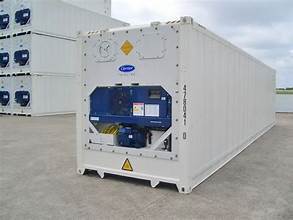
The Management of the National Port Authority (NPA) of Liberia has introduced a new requirement for frozen importers operating at all ports across the country. Effective August 20, 2026, importers must plug in refrigerated containers immediately after discharge to ensure that temperature-sensitive cargo remains properly stored and handled.
The NPA said the requirement follows international port operating practices and health and safety standards for the handling of refrigerated containers. The measure is particularly important for frozen and other temperature-sensitive goods that require continuous power to maintain the required temperature and prevent cargo from deteriorating.
Under the new fee structure, refrigerated containers will attract a daily charge based on how long they remain at the port. Containers kept for between 0 and 10 days will attract US$89.90 per container per day. Those remaining for 11 to 15 days will be charged US$107.87 per container per day, while containers staying for 16 days or more will attract US$150 per container per day.
The NPA explained that the charges are intended to cover the additional operational and administrative costs involved in handling and powering reefer containers. The authority also wants importers to clear their cargo within a reasonable period rather than allowing the port to serve as a long-term storage facility.
The policy could also help improve the movement of refrigerated cargo through Liberia’s ports by encouraging faster clearance and reducing the time containers occupy valuable terminal space. For importers, longer delays will now result in higher daily costs, making timely customs clearance, documentation and cargo collection more important.
The new requirement therefore places greater responsibility on frozen importers to make arrangements for the prompt handling and removal of their refrigerated containers after discharge. It also gives the NPA a clearer framework for managing the operational costs and port space associated with reefer cargo.
source: maritimafrica.com
