The 2026–2027 budget introduces a series of measures to unlock the potential of the blue economy as a driver of sustainable economic growth, food security and employment. It identifies the sector as a key pillar of future development, backed by targeted investments in ocean research, fisheries and aquaculture.
The government plans to develop ocean research into a growth sector that supports marine innovation and creates new job opportunities.
To achieve this, the University of Mauritius will establish an International Centre for Ocean Studies, while the National Research and Innovation Institute will coordinate research currently carried out by the Mauritius Oceanography Institute and the Albion Fisheries Research Centre.
The government will also introduce a comprehensive regulatory framework for hydrography, covering the mapping and measurement of seas, seabeds and coastal waters. In addition, it will establish a Mauritius Ocean Technology Incubator to encourage innovation and technological development across marine industries.
The budget supports the expansion of the semi-industrial fishing fleet and provides assistance to artisanal fishers, helping them transition to more productive fishing grounds.
The Economic Development Board will invite international expressions of interest for the development of 28 fish farming zones, including 20 in-lagoon sites, eight off-lagoon sites and six barachois.
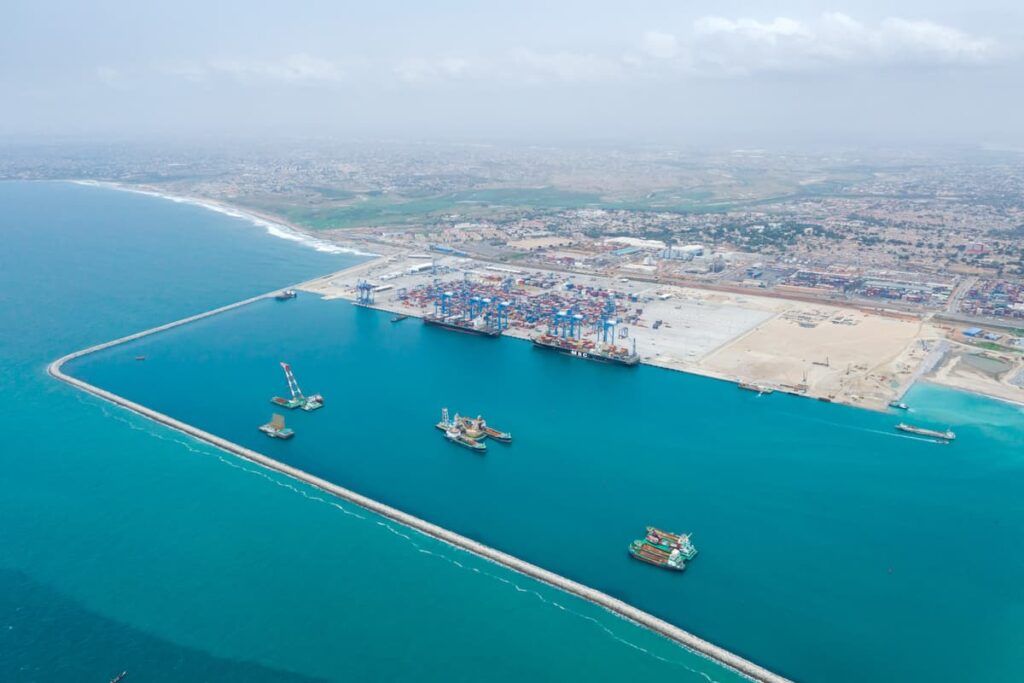
The government is also considering the construction of a new fishing port with modern landing, storage and processing facilities. The project aims to improve operational efficiency, reduce post-harvest losses and raise seafood quality standards.
To strengthen food security and boost domestic fish production, the government will introduce incentives to support bank fisheries, expand the semi-industrial fishing fleet, increase the deployment of smart fish aggregating devices and encourage investment in bank and tuna fisheries.
These initiatives are expected to raise local fish production from 5,000 tonnes to 15,000 tonnes over the next three years.
The government will also launch a dedicated programme to accelerate the production of high-value aquaculture species and promote seaweed farming for both local and export markets. The programme will support large commercial operators and SMEs by providing access to seed stock, technical assistance, financing, demonstration farms and market development support.
To encourage further investment in aquaculture, the government will introduce a 30% freight rebate scheme of up to USD 200 per container for approved imported aquaculture feeds. It will also allocate approximately Rs 41 million to immediately construct two high-capacity hatcheries at the Albion Fisheries Research Centre.
source: GIS Mauritius
